The Top 10 Upcoming AI Tools in 2026 are set to redefine how businesses, creators, and individuals work with technology. As artificial intelligence rapidly evolves, next-generation AI tools in 2026 will focus on advanced automation, multimodal capabilities, real-time decision-making, and personalized user experiences. From autonomous AI agents and intelligent coding assistants to AI-powered marketing, healthcare, and cybersecurity platforms, these upcoming tools will deliver faster, smarter, and more efficient solutions across industries.
In 2026, AI tools will go beyond simple task automation and become proactive digital partners, capable of learning, adapting, and collaborating with humans. Companies adopting these AI innovations early will gain a competitive edge through increased productivity, reduced costs, and data-driven insights. Whether you’re a business owner, developer, marketer, or content creator, staying informed about the best upcoming AI tools in 2026 is essential to future-proof your skills and strategies.
Top 10 upcoming AI tools in 2026
1. Apple Intelligence: The Future of Smart, Private AI on Apple Devices
Apple Intelligence is Apple’s next-generation artificial intelligence system designed to make iPhone, iPad, and Mac devices smarter, more helpful, and more personal than ever before. Introduced with iOS 18, iPadOS 18, and macOS Sequoia, Apple Intelligence represents Apple’s unique approach to AI—combining powerful generative models with a strong focus on privacy, on-device processing, and seamless integration across the Apple ecosystem.
Unlike traditional AI tools that rely heavily on cloud servers, Apple Intelligence is built to work primarily on-device. This means many tasks such as writing assistance, photo editing, and app interactions are processed directly on your iPhone, iPad, or Mac. When more complex processing is required, Apple uses a secure system called Private Cloud Compute, which ensures user data is never stored, tracked, or shared. This privacy-first approach sets Apple Intelligence apart from many other AI platforms.

Source : securemac.com
One of the most useful features of Apple Intelligence is its Writing Tools. These tools help users rewrite, proofread, and summarize text almost anywhere they type, including Messages, Mail, Notes, Pages, and third-party apps. Whether you want to make an email more professional, shorten a long document, or fix grammar mistakes, Apple Intelligence can do it instantly with just a few taps. This makes it especially valuable for students, professionals, and content creators.
Apple Intelligence also significantly improves Siri, making it more natural, context-aware, and useful. Siri can now understand follow-up questions, perform actions across apps, and even allow users to type requests instead of speaking. For example, you can ask Siri to find a specific email, summarize a note, or add information to a contact, all without switching apps. This smarter Siri experience feels more like a true digital assistant rather than a simple voice command tool.
In the Photos app, Apple Intelligence introduces advanced features such as natural language search and intelligent photo cleanup. Users can search for photos using simple descriptions like “dog on the beach” or “birthday party,” and the AI will find matching images. The Clean Up tool allows users to remove unwanted objects or people from photos effortlessly, improving image quality in seconds.
Apple Intelligence also brings creative tools like Image Playground and Genmoji, which let users generate images and custom emojis using text prompts or personal photos. These features add a fun and expressive layer to messaging and content creation while staying deeply integrated into Apple apps.
Overall, Apple Intelligence is not just another AI tool—it is a thoughtfully designed system that enhances everyday tasks while protecting user privacy. By blending powerful AI capabilities with Apple’s trusted ecosystem, Apple Intelligence marks a major step forward in how artificial intelligence can be both useful and responsible. As Apple continues to expand these features, Apple Intelligence is set to redefine the future of personal AI.
2. Boston Dynamics’ “New Atlas” :
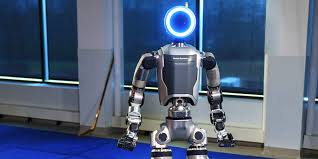
Boston Dynamics has long been at the forefront of robotics innovation, and its new Atlas robot represents a major leap forward in humanoid robotics. Unveiled as a fully electric redesign of the original hydraulic Atlas, the New Atlas showcases advanced mobility, intelligence, and real-world usability, positioning it as one of the most capable humanoid robots ever created.
Unlike its predecessor, which relied on complex hydraulic systems, the New Atlas is fully electric, making it quieter, more efficient, and easier to maintain. This shift is critical for real-world deployment, especially in industrial and commercial environments where reliability, cleanliness, and energy efficiency are essential. The electric design also allows for smoother and more precise movements, enabling Atlas to perform tasks with human-like agility.
One of the most striking features of the New Atlas is its unmatched mobility. The robot can walk, run, crouch, twist, jump, and even rotate its limbs and torso in ways that go beyond human biomechanics. Its ability to move dynamically in tight or unpredictable spaces makes it ideal for tasks that are dangerous or difficult for humans. Videos released by Boston Dynamics show Atlas moving with remarkable balance and coordination, demonstrating how far robotics has progressed in mimicking—and in some ways surpassing—human motion.
Source : https://www.galaxus.at/
The New Atlas is designed with real-world work applications in mind. Boston Dynamics has shifted its focus from pure research demonstrations to practical use cases, particularly in industries such as manufacturing, logistics, construction, and warehouse automation. Atlas is being developed to lift, carry, place, and manipulate heavy or awkward objects, helping reduce workplace injuries and improve productivity. Its humanoid form allows it to operate in environments built for humans, without requiring major infrastructure changes.
Artificial intelligence plays a central role in the New Atlas. The robot uses advanced perception systems, sensors, and AI-driven control software to understand its surroundings and respond intelligently. With improvements in machine learning and computer vision, Atlas can adapt to changing conditions, maintain balance, and perform complex sequences of actions autonomously or with minimal human input.
Another key advantage of the New Atlas is its modular and future-ready design. Boston Dynamics has built the platform to evolve, allowing new hardware components, sensors, and AI capabilities to be added over time. This flexibility ensures that Atlas can keep pace with rapid advancements in robotics and artificial intelligence.
3. OpenAI “Operator” & Agentic Frameworks
Artificial intelligence is entering a new phase, and OpenAI’s Operator with agentic frameworks is at the center of this transformation. Unlike traditional AI tools that only respond to prompts, Operator-powered agents can plan tasks, make decisions, and take action across digital environments. This shift turns AI from a passive assistant into an active collaborator.
Agentic frameworks allow AI systems to break down complex goals into smaller steps, use multiple tools, and adapt based on results. For example, an Operator-based agent can research a topic, collect data from websites, summarize findings, and deliver a complete report—without constant human supervision. This capability opens powerful opportunities for automation in customer support, software testing, research, and business operations.
What makes OpenAI’s approach stand out is its focus on control and safety. Users can define permissions, set boundaries, and review actions before execution, ensuring responsible use. Developers can also customize agents using flexible APIs, tailoring them to specific workflows and industries.
As agentic AI continues to evolve, OpenAI’s Operator points toward a future where digital work is shared between humans and intelligent agents. Instead of replacing people, these systems are designed to remove repetitive tasks and amplify human creativity. The age of AI that simply answers questions is ending—the era of AI that gets things done has begun.
4. Google “Project Astra”
Google’s Project Astra offers a glimpse into the next generation of artificial intelligence—AI that can understand the world in real time. Unlike traditional assistants that rely on text or voice alone, Project Astra is designed to be multimodal, meaning it can see through a camera, hear conversations, understand context, and respond instantly. This marks a major step toward truly universal AI assistants.
With Project Astra, users can point a phone or smart device at objects, documents, or environments and ask questions naturally. The AI can recognize what it sees, remember past interactions, and provide helpful, context-aware responses. Whether identifying objects, explaining on-screen content, or assisting with everyday tasks, Astra feels less like a tool and more like an intelligent companion.
What makes Project Astra especially compelling is its focus on real-time interaction. Instead of delayed responses, the AI processes visual and audio input continuously, allowing for fluid, human-like conversations. This opens new possibilities in education, accessibility, productivity, and navigation.
As Google continues developing Project Astra, it represents a shift toward AI that understands not just commands, but the world around us. If successful, Astra could redefine how people interact with technology—making AI more intuitive, proactive, and seamlessly woven into daily life.
5. Microsoft Copilot “Pages” & Team Agents
Microsoft is taking workplace AI to the next level with Copilot Pages and Team Agents, powerful new tools designed to transform collaboration and productivity. Rather than working in isolated chats, Copilot Pages give teams a shared, dynamic workspace where AI-generated content can be created, edited, and refined together in real time. Documents, plans, and ideas evolve collaboratively, with Copilot acting as an always-available partner.
Team Agents build on this concept by introducing AI helpers that work across Microsoft 365 apps like Word, Excel, Teams, and Outlook. These agents can summarize meetings, track action items, analyze data, and even coordinate tasks across departments. Instead of switching between apps or chasing updates, teams can rely on AI agents to keep work moving forward.
What makes Pages and Team Agents especially impactful is their deep integration into everyday workflows. They understand context, adapt to team needs, and support decision-making without replacing human judgment. Security and enterprise controls remain central, ensuring data stays protected within Microsoft’s ecosystem.
As organizations look for smarter ways to collaborate, Microsoft Copilot Pages and Team Agents point toward a future where AI doesn’t just assist individuals—it empowers entire teams to work faster, smarter, and more creatively.
6. Runway’s Act-One and Gen-4 Are Pushing AI Video Into a New Creative Era
Runway is redefining what’s possible in AI-powered storytelling with Act-One and Gen-4, two breakthroughs that signal a major leap in generative video. Act-One focuses on expressive, performance-driven video, allowing creators to generate lifelike character motion, facial expressions, and cinematic scenes using simple prompts. Instead of complex rigs or long production timelines, creators can now shape performances directly through AI.
Gen-4 takes things even further by improving consistency, realism, and control across longer video sequences. With enhanced world understanding and motion coherence, Gen-4 enables smoother transitions, more believable environments, and characters that stay visually consistent from frame to frame. This solves one of the biggest challenges in AI video generation.
Together, Act-One and Gen-4 open new doors for filmmakers, advertisers, game designers, and digital artists. Short films, commercials, and social content can now be produced faster and at lower cost—without sacrificing creative vision. The tools don’t replace human creativity; they amplify it, removing technical barriers and accelerating experimentation.
As AI continues to reshape creative industries, Runway’s Act-One and Gen-4 highlight a future where imagination moves at the speed of ideas—and high-quality video creation becomes accessible to everyone.
7. Cognition “Devin” (Enterprise Version): Transforming AI-Driven Software Development
Cognition “Devin” (Enterprise version) is redefining how organizations approach software development by introducing the world’s first AI software engineer designed for large-scale business environments. Built to handle complex workflows, Devin autonomously plans, writes, tests, debugs, and deploys code, making it a powerful asset for enterprise teams seeking speed, accuracy, and scalability.
Unlike traditional AI coding assistants, Cognition “Devin” (Enterprise version) operates as a full-cycle engineer. It understands high-level business requirements, breaks them into actionable tasks, and executes them across multiple repositories and tools. This capability significantly reduces development time while maintaining enterprise-grade security and compliance standards.
For enterprises, Devin integrates seamlessly with existing tech stacks, version control systems, and CI/CD pipelines. It enhances developer productivity by handling repetitive and time-consuming tasks, allowing human engineers to focus on architecture, innovation, and strategic decision-making. Additionally, its ability to learn from past projects ensures continuous improvement and consistent code quality.
As businesses race toward digital transformation, Cognition “Devin” (Enterprise version) offers a competitive edge by combining artificial intelligence with practical engineering execution. It represents the future of enterprise software development—faster delivery, lower costs, and smarter automation driven by AI.
8. Glean (The AI Work Hub)
Glean (the AI work hub) is transforming how modern organizations access and use information at work. Designed to eliminate time wasted searching across multiple tools, Glean provides a unified, AI-powered platform that connects company knowledge, people, and workflows in one intelligent workspace.
At its core, Glean (the AI work hub) uses advanced artificial intelligence to understand context, intent, and relevance. It delivers precise answers by securely indexing data from popular enterprise applications such as Google Workspace, Microsoft 365, Slack, Jira, Confluence, and more. Employees can instantly find documents, conversations, and insights without switching platforms.
What sets Glean apart is its ability to personalize results for every user. By learning from behavior and permissions, Glean ensures that employees see the right information at the right time—improving productivity while maintaining enterprise-grade security and compliance. Its AI assistant also helps summarize content, answer natural-language questions, and surface proactive insights.
For growing businesses and large enterprises alike, Glean (the AI work hub) reduces knowledge silos and accelerates decision-making. Teams spend less time searching and more time executing impactful work. As organizations embrace AI-driven productivity tools, Glean stands out as a central hub that empowers employees to work smarter, faster, and more collaboratively.
9. Perplecity “Pages” & Answar Engine: Redefining AI-Powered Knowledge Discovery
Perplecity “Pages” & Answar Engine is transforming the way users search, consume, and trust information online. Built on advanced artificial intelligence, this innovative platform goes beyond traditional search engines by delivering clear, concise, and well-sourced answers instead of long lists of links.
Perplecity “Pages” & Answar Engine organizes complex topics into structured, easy-to-read pages that combine explanations, citations, and contextual insights. This approach helps users quickly understand subjects without jumping between multiple websites. Whether researching business trends, technical concepts, or general knowledge, users benefit from accurate and conversational responses powered by AI.
What makes Perplecity “Pages” & Answar Engine stand out is its focus on answer quality and transparency. The system references reliable sources, enabling users to verify information and build trust in the results. Its intuitive interface and natural-language processing make it accessible to professionals, students, and researchers alike.
As demand grows for faster and more reliable information, Perplecity “Pages” & Answar Engine represents the future of intelligent search. By combining AI-driven reasoning with organized content delivery, it improves productivity, reduces information overload, and reshapes how people interact with digital knowledge in an AI-first world.
10. Wayve.AI: Pioneering the Future of Autonomous Driving with Embodied AI
Wayve.AI is revolutionizing the autonomous vehicle industry by developing next-generation artificial intelligence that learns to drive like a human. Unlike traditional self-driving systems that rely heavily on hand-coded rules and detailed maps, Wayve.AI uses embodied AI and end-to-end deep learning to adapt to real-world driving environments with greater flexibility and safety.
At the core of Wayve.AI is a data-driven approach that allows vehicles to learn directly from experience. By training AI models on vast amounts of driving data, Wayve.AI enables autonomous systems to handle complex scenarios such as urban traffic, unpredictable road conditions, and human behavior. This approach significantly reduces development time while improving scalability across different cities and regions.
Wayve.AI’s technology is designed to work with cost-effective sensor setups, making autonomous driving more accessible for automakers and mobility providers. Its learning-based system continuously improves over time, helping vehicles make smarter decisions with each mile driven.
As the demand for safe and efficient self-driving solutions grows, Wayve.AI stands out as a leader in embodied intelligence. By combining advanced machine learning with real-world adaptability, Wayve.AI is shaping the future of autonomous transportation and redefining how AI interacts with the physical world.